0
- ONLINE GROCERY
- OUR HISTORY
- BLOG
- CONTACT
- MY ACCOUNT
- PRO
6,60 €34,00 € /kg
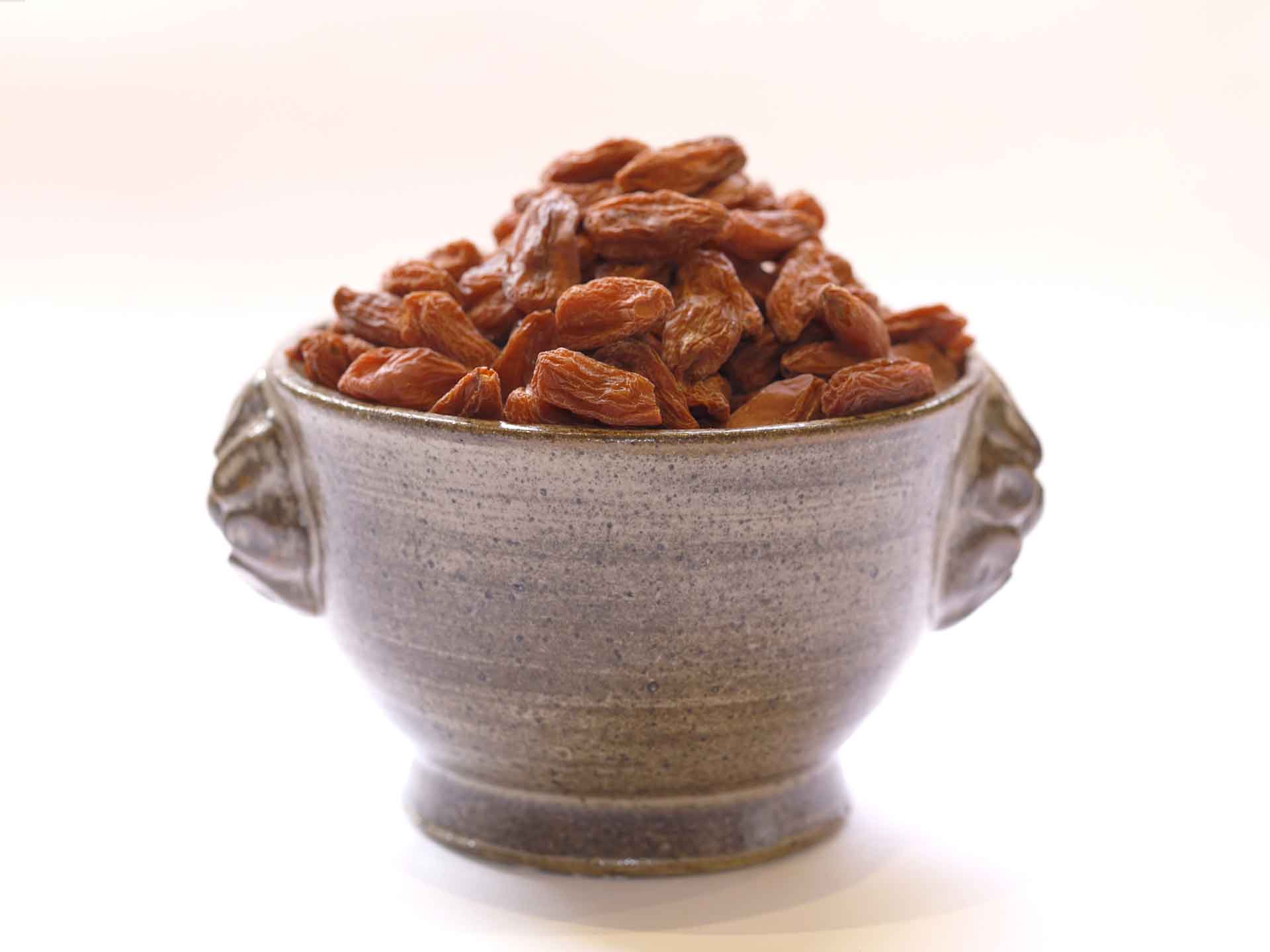
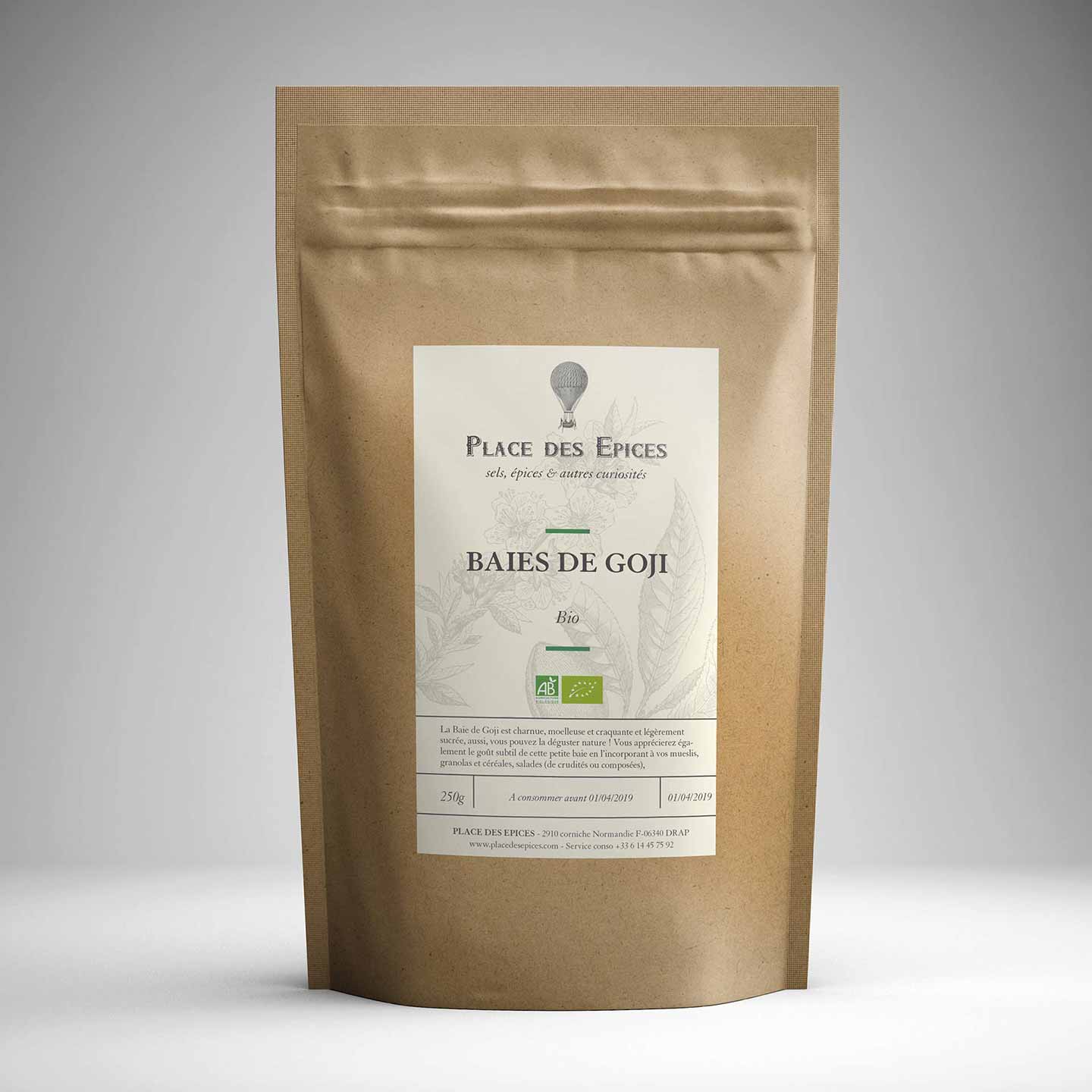
Goji berries are fleshy, soft, crunchy and slightly sweet, but you can also enjoy them on their own!
You'll also appreciate the subtle taste of this little berry when you add it to mueslis, granolas and cereals, salads (raw or mixed), tabbouleh, dairy products, soups, savory cakes (parmesan-goji berry), exotic sauces and chutneys, fish, chicken, duck breast...

Organic Goji berries come from a shrub belonging to the Solanaceae family, a family we're all familiar with because the potato and tomato belong to it. Native to Asia, but especially China, the bright red Goji berry is extremely rich in antioxidants and Vitamin C. An excellent source of Vitamin A, organic Goji berries can be eaten dried or rehydrated for a few minutes in hot, but not boiling, water.
Un peu d’histoire
Les moines Tibétains auraient découvert la Baie de Goji il y a environ 4 500 ans, dans les montagnes du Tibet. Utilisée par ailleurs depuis plus de 2 500 ans dans la pharmacopée traditionnelle asiatique, cette petite baie a également toujours été appréciée comme aliment.
A l’origine, ces arbustes épineux poussaient à l’état sauvage dans les hautes montagnes Himalayennes du Tibet et dans la région du Cashemire, en Inde.
Les Baies de Goji ont rapidement été cultivées par les populations locales avant de se répandre en Mongolie et en Chine.
En Asie centrale, elle est considérée comme le fruit de la prospérité et de la longévité grâce aux vertus qui lui sont attribuées depuis des siècles.
La Baie de Goji a pour nom botanique Lycium barbarum L ; elle est originaire de l’Ouest de la province chinoise du Qinghai (plateau tibétain, province détachée du Tibet(1)) qui tire son nom du lac Qinghai, le plus grand lac salé du pays (« lac de la mer bleue »). Perchés à 2 400 mètres d’altitude, ces arbustes sont irrigués par l’eau pure des glaciers des hautes montagnes environnantes…
Consumption
Goji berries are perfect in desserts: shortbread, cookies, financiers, muffins, scones, brioches, rice creams, caramel creams, fresh fruit salads, chocolate cakes...
And for a taste of Asia, infuse your goji berries in green or jasmine tea...
Properties of Goji berry
Goji berries, like mulberries, can be taken as an occasional cure or on a daily basis. In this case, do not exceed one tablespoon of goji berries (approx. 15-20g).
Recommended for...
- anyone (children, teenagers, students, athletes, mobile or sedentary workers, the elderly, vegetarians, vegans, etc.): goji berries contain numerous minerals, trace elements and amino acids (vitamins A (beta-carotene), B and E, zinc, copper, selenium, phosphorus, calcium, iron, etc.) and are rich in polysaccharides, powerful antioxidants with immunostimulant, antidiabetic, antihypertensive and lipid-lowering properties.
Indeed, a highly prized product of Traditional Tibetan and Chinese Medicine, goji berry is usually used to improve overall health: protecting vision, boosting the immune system, liver and kidney function, sperm production...
It should be noted, however, that no recent clinical trials have confirmed these claims (health effects of goji berry consumption on humans).
It owes its undeniable source of vitamins, minerals and antioxidants to the hostile climate of the high Himalayan mountains. A real concentrate of benefits...
Recommendations
Goji berry should be part of a varied, balanced diet.
However, this product is not recommended in the event of :
- diabetic diets,
- hypertriglyceridemia (fructose sensitivity),
- renal insufficiency,
- intestinal disorders,
- pregnancy and breast-feeding: there is insufficient data to establish the safety of goji during pregnancy and breast-feeding.
- allergy or intolerance: some people may suffer from allergy or intolerance to goji or other foods of the solanaceae family (tomatoes, potatoes, eggplants, peppers, etc.).
- blood circulation disorders: it is not recommended for people taking anticoagulants, as goji berry may increase the anticoagulant effect of warfarin(2).
(1) G. Mennessier, Th. Sanjuan and P. Trolliet, Chine : cadre naturel, Encyclopédie Universalis.
(2) Izzo A.A. et al, Cardiovascular pharmacotherapy and herbal medicines: the risk of drug interactions, Int. J. Cardiol, 2005 Jan, 98(1): 1-14.
Botany: Lycium chinense, Lycium barbarum
Origin : Asia
Ingredients : 100% ORGANIC Goji berry
Shelf-life: guaranteed for 200 days
Quality: ORGANIC
Other names: Gou Qi Zi (China), Tibetan Goji, Goji, Chinese lyciet, common lyciet, barbarous lyciet
| Weight | 50 g |
|---|---|
| Weight | 100g pouch, 250g pouch, 500g pouch, 1000g pouch |
| Color | Red |
| Continent-Country | Asia |