0
- ONLINE GROCERY
- OUR HISTORY
- BLOG
- CONTACT
- MY ACCOUNT
- PRO
6,20 €31,20 € /kg
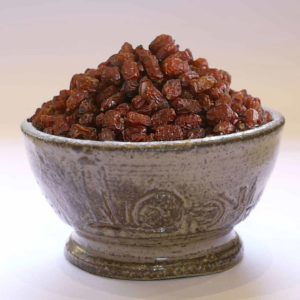
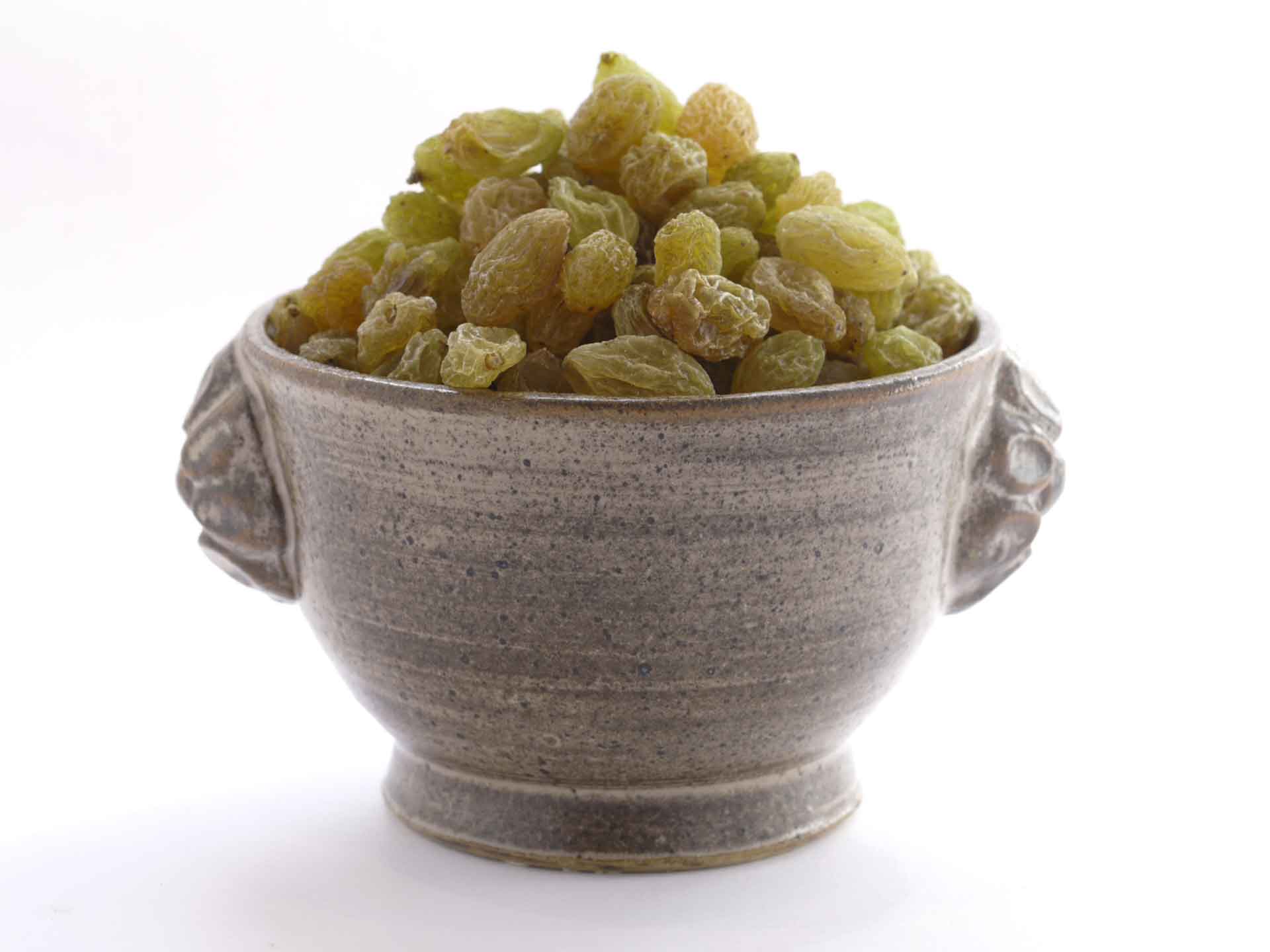
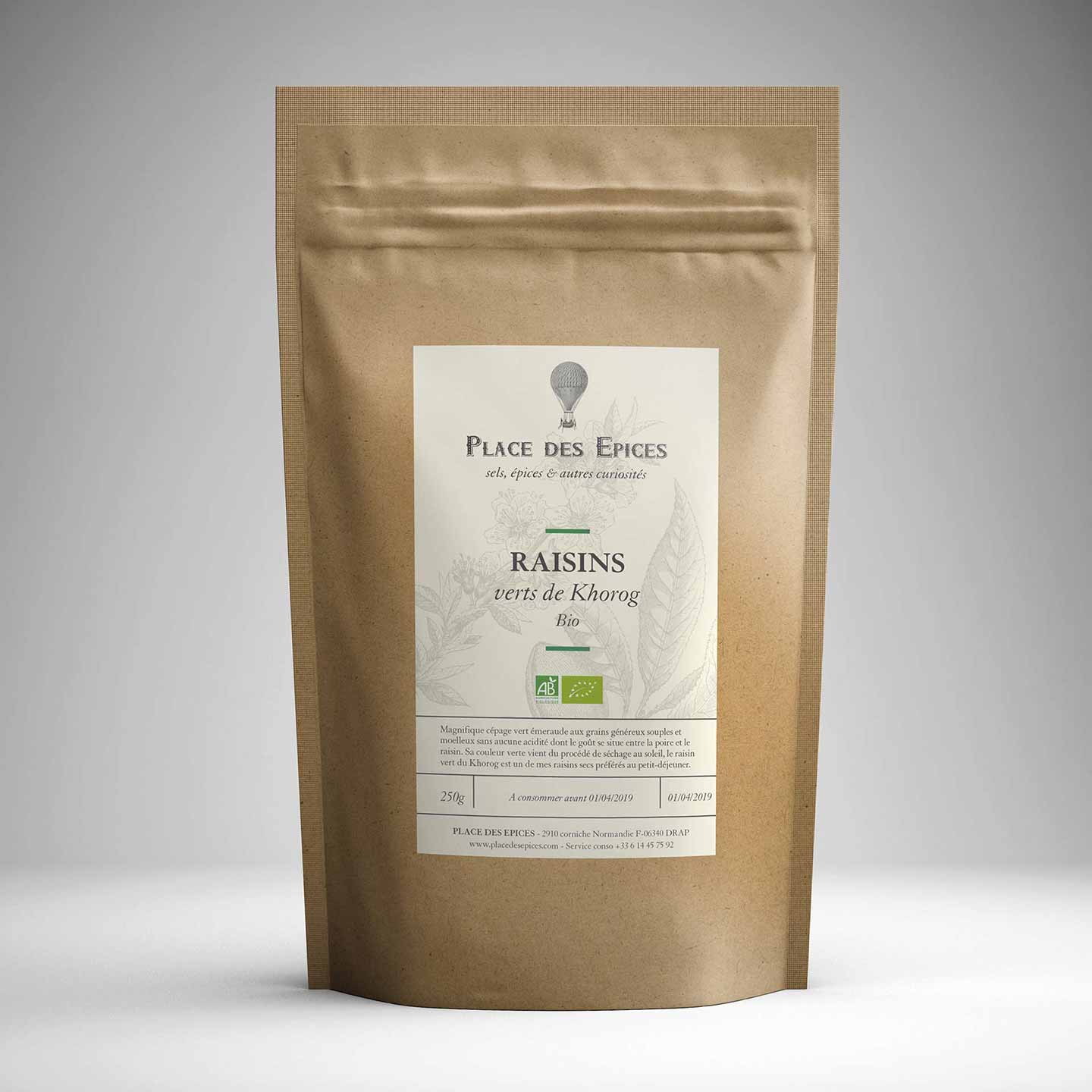
A magnificent emerald-green grape variety with generous, supple, mellow berries and no acidity, its taste is somewhere between pear and grape. Its green color comes from the sun-drying process, and the green Khorog grape is one of my favorite raisins for breakfast.

The health benefits of Khorog green grapes are numerous. Their fiber aids digestion, and they contain oleanolic acid, which protects against tooth decay and loosening. Grapes are also a source of calcium and reduce the body's overall acidity. Their polyphenols protect against free radicals. Finally, grapes have anti-bacterial and anti-inflammatory properties.
History
Grapes, a product of the vine, are one of the oldest known fruits...
Archaeologists agree that the cradle of the first wild vines (Vitis sylvestris) was in the Mediterranean region, and that its fruit, grapes, was eaten by man as early as the Palaeolithic era... Then, in the Neolithic period (around 8,000-4,000 BC), in Asia Minor (between the Arabian Gulf and the Black Sea), man began to cultivate vines. The first grape varieties were spread around the Mediterranean by the Phoenicians, Greeks and Romans. Indeed, the Greeks were fervent consumers of wine (as attested by mythology and the cult of Dyonisos or Bacchus...). The Egyptians and Romans also consumed grapes, whether fresh, dried (apyrene varieties - i.e. seedless grapes - have been used since Antiquity to produce raisins) or in the form of wine; the latter greatly contributed to the spread of its cultivation throughout the Empire.
Originating from Uzbekistan, the Green Khorog Grape derives its unique appearance and delicious aroma from the manual work carried out during its growth. To preserve this unique color, the hand-picked grapes are dried slowly and gently in the shade.
With its emerald color and sweet, honey-like taste, this little culinary jewel is the perfect accompaniment to your aperitifs and snacks. Bring a touch of the Arabian Nights into your kitchen!
Consumption
Plain or as a snack, raisins can be enjoyed on the go!
For breakfast, they can be added to mueslis, cereals, oatmeal or used to make bread or pastries (brioche, raisin bread, etc.).
As an aperitif, it can be enjoyed on its own or with otherproducts (almonds, cashews, hazelnuts, coconut flakes and/or other dried fruits...), or in bite-sized appetizers (fresh goat's cheese-macadamia-pepper-raisin)...
Grapes can be used in sauces and vinaigrettes, mixed salads or raw vegetables (endive-carrot-grated cabbage-walnut-raisin), savory-sweet fillings (vegetable...), oriental recipes (tabbouleh, couscous, tajines...), meats (foie gras, poultry, pork, beef), fish (cod, monkfish), empanadas, pasta, cooked vegetables, cereals (bulgur, millet, semolina...).
Sweeten your dairy products (fromage frais, yogurt, etc.) and soften your cheese platter (goat's, sheep's).
Ideal in desserts and pastries: fresh fruit salads, compotes, custards, clafoutis, cakes, scones, muffins, cookies, kouglof, rum babas, puddings, Ghriba (Moroccan cake), crumbles, semolina or rice cakes, rice pudding, creams, crème brûlées, pancakes, ice cream or ice cream (rum-raisin)...
Tip: For softer grapes, soak for 1/2 hour in water, apple juice or grape juice to rehydrate.
Properties
Daily recommendation: consume in moderate quantities due to high carbohydrate content.
They can be eaten occasionally or daily. In this case, do not exceed 30 to 40g of raisins.
Il est recommandé :
– à toute personne : le raisin sec est source de flavonoïdes, antioxydants qui neutralisent les radicaux libres. Il participe ainsi à la prévention des maladies cardiovasculaires, de certains cancers*…
– aux sportifs et aux enfants, adolescents : avant, pendant et après l’effort ou aux récréations, en remplacement des sucreries. Champion de l’apport en phosphore parmi les fruits secs, le raisin sec est un dynamisant musculaire et cérébral qui améliore les performances physiques et intellectuelles (mémorisation,
concentration…)
– aux femmes enceintes et allaitantes : leurs besoins en énergie, protéines, lipides, glucides, minéraux et fibres sont augmentés (à partir du deuxième trimestre de grossesse).
– aux personnes âgées : qui manquent souvent d’appétit ou qui souffrent de paresse intestinale et qui recherchent une «douceur» saine et digeste ; le raisin est riche en fibres, facilement assimilables.
Le raisin Vert de Khorog est apyrène, c’est-à-dire qu’il ne contient pas de pépin. Aussi, il peut être consommé par les personnes souffrant de diverticulose.
– aux personnes fatiguées, travailleurs prostrés, routiers, représentants… : il aide à combattre la fatigue car il permet de ressourcer rapidement l’organisme en énergie et minéraux.
– aux végétariens, végétaliens (ou végans) : pour son intérêt nutritionnel ; en effet, le raisin est source de cuivre, potassium, phosphore, fer, manganèse, magnésium, vitamines B (B2, B6, B9)…
Recommendations
Khorog Green Grapes should be part of a varied, balanced diet.
However, this product is not recommended in the event of :
- diabetic diets,
- hypertriglyceridemia (fructose sensitivity),
- colopathy (ulcerative colitis, diarrhea),
These dietary recommendations do not replace medical advice.
* Jo JY, Gonzalez dM, Lila MA. Effects of grape cell culture extracts on human topoisomerase II catalytic activity and characterization of active
fractions. J Agric Food Chem. 2005;53:2489-2498.
Botany: Vitis
Origin: Uzbekistan
Ingredients : 100% organic Khorogh green grapes
Shelf life: 200-day guarantee
Quality: ORGANIC
Other names: Asian green grapes, green grapes
Nutritional value of green Khorog grapes
(Per 100 g)
Protein
Carbohydrates
Sugars
Fat
Saturated fatty acids
Salt
| Weight | 50 g |
|---|---|
| Weight | 100g pouch, 250g pouch, 500g pouch, 1000g pouch |
| Color | Brown-green |
| Continent-Country | Asia |